
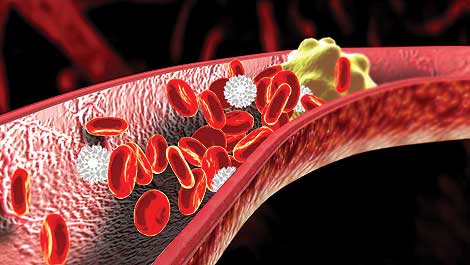
Not all cholesterol is bad!
Cholesterol, a waxy substance produced by the liver from fatty foods, is vital for the normal functioning of the body.
Cholesterol travels around the body encased in proteins. There are two types:
- high density lipoprotein (HDL) is the so-called ‘good’ cholesterol, and
- low density lipoprotein (LDL), is the ‘bad’ cholesterol
Cholesterol is deposited in the arteries where it is needed and the good cholesterol takes the excess bad cholesterol back to the liver, where it is either broken down or flushed out of the body.
Too much ‘bad’ cholesterol can lead to a gradual build-up of fat in the arteries. Over time, this can increase your risk of developing cardiovascular disease, such as coronary heart disease, as well as diabetes mellitus and stroke.
A healthy diet can significantly help reduce your cholesterol level. Fat in food is made up of a combination of saturated fats, monounsaturated fats and polyunsaturated fats.
Dietary cholesterol is found in egg yolks, shellfish (e.g. shrimps/prawns), calamari and organ meats (liver, kidneys, etc). While excessive intake of dietary cholesterol can contribute to raised cholesterol levels, it has been shown that saturated fats have a far greater impact on total cholesterol than and LDL-levels.
Saturated fats can increase the level of bad cholesterol in the blood and increase the risk of narrowed arteries. Foods high in saturated fat include butter, hard cheese, fatty meat, cream, full cream milk (all animal fats), biscuits, cakes (all commercially baked goods), coconut oil, palm oil and milk creamers.
Monounsaturated fats can lower bad cholesterol, while maintaining good cholesterol. Sources of monounsaturated fats include avocado, olive and canola oil, some nuts and peanut butter.
Polyunsaturated fats reduce total cholesterol. Sources of polyunsaturated fats include sunflower oil, margarines, ect.
Raised total cholesterol and LDL-cholesterol and/or low HDL-cholesterol are risk factors for coronary heart disease. Raised triglyceride levels are an independent risk factor for coronary heart disease.
Healthy ranges for blood fats:
- Total cholesterol: < 5,0 mmol/l (but is age-related)
- HDL-cholesterol: > 1.0 mmol/l
- LDL-cholesterol: < 3.5 mmol/l
- Triglyceride: < 1.7 mmol/l
Tips to reduce your cholesterol levels:
- Cut down on saturated fats and replace them with small amounts of monounsaturated and polyunsaturated fats.
- Keep your overall fat intake low (1-2 teaspoons/day of margarine/olive/canola oil).
- Avoid fatty foods such as pastries, crisps, cakes and biscuits and replace them with healthier options such as fruit or vegetables.
- Eat oily fish at least once a week. Oily fish such as herring, sardines, salmon, trout and fresh tuna, are the richest source of omega-3 fats.
- Foods high in soluble fibre such as porridge, beans, pulses, lentils, nuts, fruits and vegetables can help lower cholesterol.
- Keep your intake of food high in dietary cholesterol minimal, e.g. use a maximum of 2-3 eggs/week, have organ meats/shellfish no more than once a month.
Written By : Dieticians At Work Team